


- HOME
- SPECIES
Featured
Higher dietary nutrient contributionsWe have developed an enzyme application strategy called Maximum Matrix Nutrition, which capitalises on the properties of Quantum Blue, an enhanced E. coli phytase with a high affinity for phytate, in addition to a thermostable and inhibitor-resistant xylanase, Econase XT.
Improved monitoring of raw materials and finished feedsOur range of NIR Services aims to provide a convenient and cost-effective ability to analyse feeds and raw materials, using calibrations, process control, support and analytical tools.
Stimulating the microbiome to improve productivityIncreasing understanding of fibre is presenting a new perspective on the valuable role it can play in gut health and therefore, within performance-enhancing nutritional strategies.
EXPERTS IN ANIMAL NUTRITION FOR THE ANIMAL FEED INDUSTRY
- PRODUCTS
All Products
Quantum Blue works to unlock all six phosphorus molecules, releasing inositol and valuable nutrients that would otherwise stay bound to phytate.
INDUSTRY-LEADING PRODUCTS TO MAXIMISE ROI
- SERVICES
- INSIGHTS
















Fibre Insights: A deep dive on fibre’s evolving role in animal nutrition
Published Friday, 12th December 2025
To explore this shift and its implications for poultry and swine production, we sat down with three AB Vista experts: Alexandre Barbosa de Brito, Head of Global Technical Service, Gustavo Cordero, Global Swine Technical Manager, and Xavière Rousseau, Global Poultry Technical Manager.
Here, they address some of the most pressing questions surrounding fibre and its use in modern diets.
Is fibre an antinutrient or a valuable component of the diet?
Alexandre Barbosa de Brito: Despite some of its effects on nutrient absorption, fibre is a valuable component of the diet, not an antinutrient, especially when enzymatic additives (such as xylanase) or stimbiotic additives are used. This nutritional fraction, little explored in the past, is currently being treated as a possibility to increase energy for animal performance and to provide numerous health benefits.
What has been the most significant advancement in our understanding of fibre in the last five years?
Alexandre Barbosa de Brito: It was certainly the determination of more modern techniques for analysing and determining the real fibre fractions and their different fractions, such as soluble and insoluble. Knowing these fractions plays an important role in how we use fibre; an additive can be very efficient with one fraction of this exact fibre composition yet have little action or be inert in another. A fuller understanding of the true nature of fibre has meant we’ve been able to develop innovative nutritional additives that unlock greater fermentative benefits from fibre present in large volumes in poultry and swine feed. One of the main new definitions of fibre is the concept of Dietary Fibre. AB Vista provides this knowledge to our customers via Near-Infrared (NIR) Spectroscopy assessments through the online NIR platform in our Feed Quality Service.
Why move from conventional methods such as crude fibre to total dietary fibre (DF) assessment?
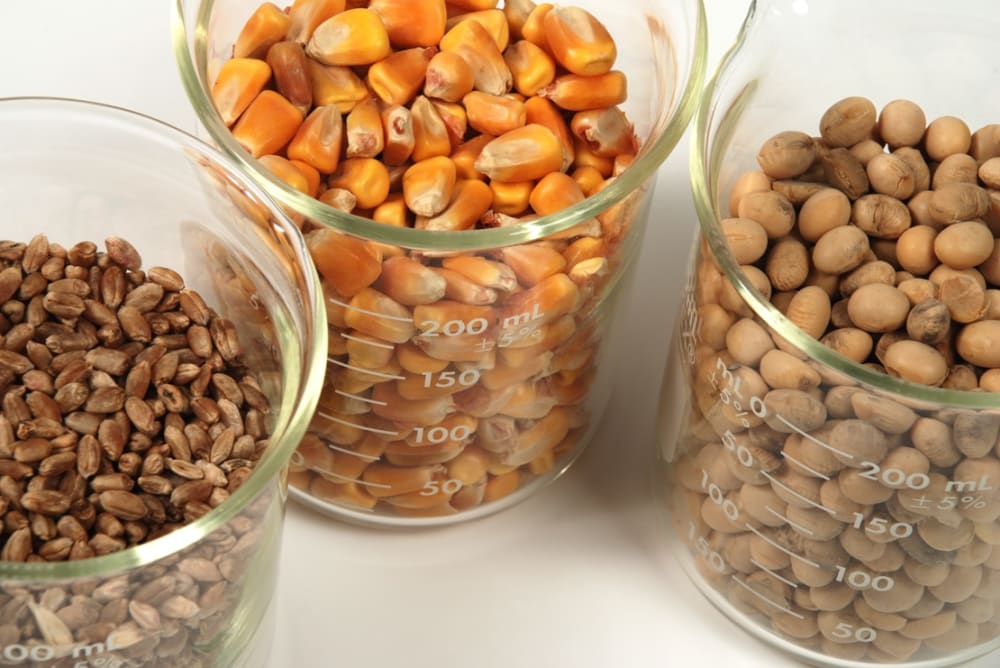
DF is a term originally developed for use in human nutrition. Briefly, this fibre classification can be defined as the sum of Non-Starch Polysaccharides (NSPs), in its most diverse fractions, soluble and insoluble, and lignin. The analysis in wet chemistry is endorsed by official methods (AOAC Methods 985.20; 993.19; 991.42; 991.43; 992.16) and can be summarised by the use of enzymatic agents to determine these organic proportions. NSP is understood as the sum of its main constituents, such as glucose β 1-4, arabinose, xylose, galactose, raffinose, uronic acid compounds, mannose and fucose.
How can fibre enhance animal nutrition?
Alexandre Barbosa de Brito: Before starting this answer, it is important to note that fibre is not digestible but a fermentable nutrient. Therefore, if a poultry and swine nutritionist or animal health professional uses additives (such as xylanases specialised in the action of soluble and insoluble fractions of arabinose and xylose, or stimbiotic feed additives), the result would be an increase in energy values provided by the fermentation of these fibre fractions (due to the production of short chain fatty acids). This supports healthy digestion, regulates intestinal transit, balances gut microbiota, and influences nutrient absorption and utilisation. It also helps with satiety, weight management, and even plays a role in stabilising blood sugar levels.
Are there still concerns or misunderstandings surrounding fibre in animal feed?
Alexandre Barbosa de Brito: Yes, this is common. Using our fibre expertise, we aim to clarify this evolving definition and use of fibre concepts. Modern advancements in fibre understanding can be compared to the shift from the outdated notion of crude protein (used in formulations until the 1980s) to today’s concept of ideal protein. While the total nitrogen content in the diet is important, the composition and digestibility of individual amino acids is what truly determines animal performance. A similar transformation is taking place in our understanding of fibre. We must consider fibre’s fundamental constituents, along with its solubility and insolubility characteristics. These refined definitions bring greater clarity to the nutritionist or animal health professional when choosing tools to increase the fermentation of these biocomponents.
What are the principles of formulating diets to reduce the negative effects of fibre while capturing its benefits?
Alexandre Barbosa de Brito: We can divide fibre into two groups:
- Functional fibres (that will not be fermented by the intestinal microbiome of monogastrics), with fractions including insoluble glucose β 1-4 and lignin; and,
- Fermentable fibres (that, with correct treatment, can be fermented in the gut of monogastrics), with fractions such as arabinose, xylose, soluble glucose β 1-4, among others.
We can make greater use of functional fibres, especially for the nutrition of animals in the reproductive period. These fractions provide greater retention of feed in the stomach or gizzard, generating more satiety and improving nutrient digestion.
By understanding the composition of fermentable fibre fractions, we can apply feed additives to reduce their degree of polymerisation, converting polysaccharides into oligosaccharides of fibre. These oligosaccharides generate greater fermentative potential. Knowing the composition of fermentable DF enables us to choose the enzymes or stimbiotics best suited to act on each component.
How can a deeper understanding of fibre help nutritionists and production managers?
What tools help unlock the potential of fibre in feed formulation?
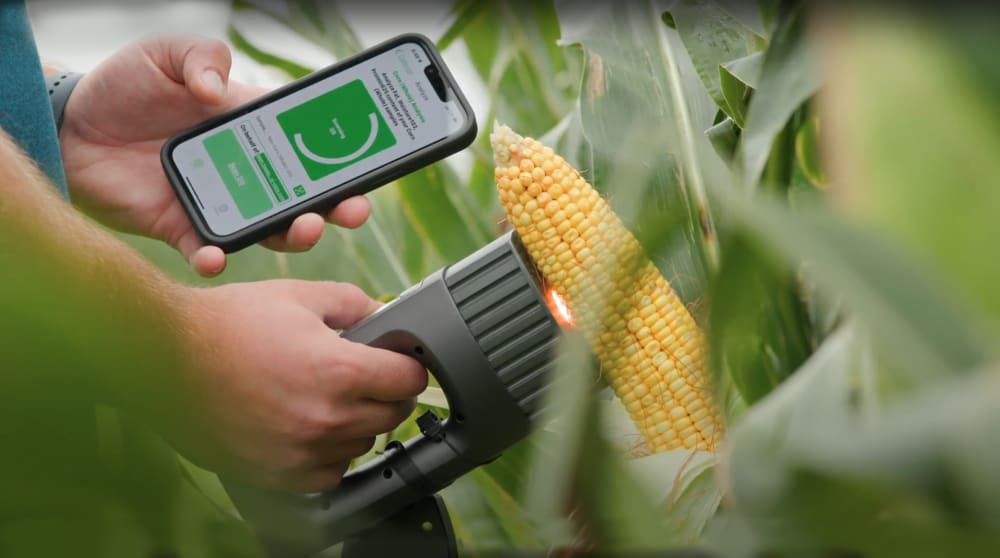
Xavière Rousseau: AB Vista has invested in and developed NIR equations to characterise the NSP profiles of key feed ingredients. If the reference methodology for fibre analysis is used over a long period, it can show variability between laboratories – and these methods are time consuming and expensive. In order to make fibre characteristics practical for feed formulation, it was essential to develop faster, easier, and more economical ways to analyse – hence the development of NIR calibrations. To build on this, we have also developed a Feed Fibre Calculator to provide a clear picture of the final fibre profile based on ingredient composition and inclusion levels in the feed.
What are the differences between soluble and insoluble fibre in relation to animal performance?
Xavière Rousseau: Using crude fibre methodology as a reference for poultry diets, we were only able to capture part of the insoluble fibre fraction, which is why fibre was regarded as a diluent, with fixed minimum or maximum inclusion levels. Nevertheless, research has shown that with the inclusion of insoluble fibre a gizzard development and higher retention time for digestibility improvement was observed.
The soluble fraction has often been underestimated or overlooked despite its different roles and functions. Primarily, soluble fibre is responsible for viscosity, which is less important due to the common use of xylanase and the reduced viscosity of today’s raw ingredients. Secondly, soluble fibre plays a key role in hindgut fermentation within the caeca, particularly in poultry. Research has shown that the energy release from hindgut fermentation can account for up to 10 percent of the energy requirement in broilers. Moreover, fermentation end products have many other functions relative to the modulation of mucosal and systemic antibody responses.
What role will fibre play in the future of animal production?
Gustavo Cordero: Fibre has historically been mostly disregarded as a nutrient and perceived as a diluent or binder to other nutrients. Due to improvements in analytical capabilities and ongoing research, we have a much stronger understanding of its benefits today. In the sow, the addition of fibre is revealed to have numerous benefits, from maintaining body condition score to improving milk quality and supporting overall digestive health. Notably, fibre plays a crucial role around farrowing, mitigating constipation risks and providing additional energy for the sow while farrowing larger litters. For piglets, fibre supports the development of the gastrointestinal tract, establishing a healthy diverse microbiota and preventing scours, contributing to their overall health and long-term growth.
How do you see the impact of fibre inside the barn, and is it only important for nutritional balance?
Given this, along with the variability in the composition of key fibre ingredients, it makes it difficult for producers to incorporate fibre accurately. In addition, soluble, fermentable, fibre rich ingredients are largely unavailable for pig diets due to cost or availability. Going forward, I see more use of NIR technology to understand the composition of fibre of ingredients, not limited to total dietary fibre, but soluble and insoluble components and even further down to individual NSP fractions. I also see the use of feed additives or isolated fibre components to transform the fibre into the key substrates versus being able to provide those expensive feed ingredients directly.
How does fibre represent the integration between nutrition and production, and what tools support this?
Gustavo Cordero: AB Vista equips nutritionists with essential tools including table values from our Fibre Guide, a Fibre Calculator to explore fibre inclusions, and access to NIR technology, to determine the fibre composition in their own ingredients. These tools address the key limitations of incomplete or inaccurate routine fibre analysis, allowing producers to unlock the potential of fibre by better understanding its composition and transforming it to benefit both animals and the microbiota. Our goal is to help producers achieve their KPIs through continued research, collaboration and leveraging technologies.
Latest news
Stay ahead with the latest news, ideas and events.

Online Feed Fibre Calculator
Calculate the percentage of dietary fibre in your feed
Our calculator is designed for nutritionists and uses averages of global raw materials to calculate the dietary fibre content (plus other more in-depth fibre parameters) of finished animal feed. These parameters are available within AB Vista’s Dietary Fibre analysis service (part of our NIR service).
Sign up for AB Vista news
A regular summary of our key stories sent straight to your inbox.
SUBSCRIBE
Woodstock Court, Blenheim Road, Business Park, Marlborough, Wiltshire, SN8 4AN
© AB Vista. All rights reserved 2025
Website T&Cs Privacy & Cookie Policy Terms & Conditions of Sale University IDC policy Speak Up Policy